


CVE-2026-35093
Libinput: libinput: unauthorized code execution and information disclosure through lua bytecode plugins
Description
A flaw was found in libinput. A local attacker who can place a specially crafted Lua bytecode file in certain system or user configuration directories can bypass security restrictions. This allows the attacker to run unauthorized code with the same permissions as the program using libinput, such as a graphical compositor. This could lead to the attacker monitoring keyboard input and sending that information to an external location.
INFO
Published Date :
April 1, 2026, 2:16 p.m.
Last Modified :
April 7, 2026, 8:31 p.m.
Remotely Exploit :
No
Source :
[email protected]
Affected Products
The following products are affected by CVE-2026-35093
vulnerability.
Even if cvefeed.io is aware of the exact versions of the
products
that
are
affected, the information is not represented in the table below.
CVSS Scores
| Score | Version | Severity | Vector | Exploitability Score | Impact Score | Source |
|---|---|---|---|---|---|---|
| CVSS 3.1 | HIGH | 53f830b8-0a3f-465b-8143-3b8a9948e749 | ||||
| CVSS 3.1 | HIGH | [email protected] |
Solution
- Update libinput to the latest version.
- Restrict write access to configuration directories.
- Review and sanitize Lua scripts.
- Disable Lua execution if not needed.
References to Advisories, Solutions, and Tools
Here, you will find a curated list of external links that provide in-depth
information, practical solutions, and valuable tools related to
CVE-2026-35093.
| URL | Resource |
|---|---|
| https://access.redhat.com/security/cve/CVE-2026-35093 | Third Party Advisory |
| https://bugzilla.redhat.com/show_bug.cgi?id=2453839 | Issue Tracking Third Party Advisory |
| https://gitlab.freedesktop.org/libinput/libinput/-/work_items/1271 | Broken Link |
CWE - Common Weakness Enumeration
While CVE identifies
specific instances of vulnerabilities, CWE categorizes the common flaws or
weaknesses that can lead to vulnerabilities. CVE-2026-35093 is
associated with the following CWEs:
Common Attack Pattern Enumeration and Classification (CAPEC)
Common Attack Pattern Enumeration and Classification
(CAPEC)
stores attack patterns, which are descriptions of the common attributes and
approaches employed by adversaries to exploit the CVE-2026-35093
weaknesses.
We scan GitHub repositories to detect new proof-of-concept exploits. Following list is a collection of public exploits and proof-of-concepts, which have been published on GitHub (sorted by the most recently updated).
Results are limited to the first 15 repositories due to potential performance issues.
The following list is the news that have been mention
CVE-2026-35093 vulnerability anywhere in the article.
-
 Daily CyberSecurity
Linux Privilege Escalation: “Pack2TheRoot” Flaw Impacts Major Distributions
A long-standing security flaw has been unearthed in a core component of the modern Linux desktop and server ecosystem. Known as Pack2TheRoot, this critical vulnerability resides in PackageKit, a D-Bus ... Read more

-
Daily CyberSecurity
CVE-2026-4370 (CVSS 10): Critical Juju Flaw Grants Attackers Total Infrastructure Control
The cybersecurity community is on high alert following the discovery of a critical security flaw in Juju, the popular open-source application orchestration engine. Labeled as CVE-2026-4370, the vulner ... Read more
-
Daily CyberSecurity
Breaking the Input: Sandbox Escape Hits libinput, Exposing Leading Linux Desktops
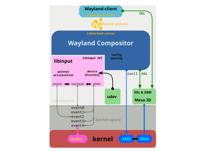
The core of modern Linux input handling is facing a significant security challenge. libinput, the essential library that manages everything from mouse clicks to touchpad gestures for display servers, ... Read more

-
Daily CyberSecurity
The MuPDF Vulnerability Turning “Safe” PDFs into System Hijackers
A significant security flaw has been unearthed in Artifex MuPDF, a popular framework prized for its speed and versatility in handling PDFs, XPS, and e-books. Labeled as CVE-2026-3308, this integer ove ... Read more
The following table lists the changes that have been made to the
CVE-2026-35093 vulnerability over time.
Vulnerability history details can be useful for understanding the evolution of a vulnerability, and for identifying the most recent changes that may impact the vulnerability's severity, exploitability, or other characteristics.
-
Initial Analysis by [email protected]
Apr. 07, 2026
Action Type Old Value New Value Added CPE Configuration OR *cpe:2.3:o:fedoraproject:fedora:43:*:*:*:*:*:*:* *cpe:2.3:o:fedoraproject:fedora:44:*:*:*:*:*:*:* *cpe:2.3:a:freedesktop:libinput:*:*:*:*:*:*:*:* versions up to (excluding) 1.30.3 *cpe:2.3:a:freedesktop:libinput:*:*:*:*:*:*:*:* versions from (including) 1.30.4 up to (excluding) 1.31.1 Added Reference Type Red Hat, Inc.: https://access.redhat.com/security/cve/CVE-2026-35093 Types: Third Party Advisory Added Reference Type Red Hat, Inc.: https://bugzilla.redhat.com/show_bug.cgi?id=2453839 Types: Issue Tracking, Third Party Advisory Added Reference Type Red Hat, Inc.: https://gitlab.freedesktop.org/libinput/libinput/-/work_items/1271 Types: Broken Link -
New CVE Received by [email protected]
Apr. 01, 2026
Action Type Old Value New Value Added Description A flaw was found in libinput. A local attacker who can place a specially crafted Lua bytecode file in certain system or user configuration directories can bypass security restrictions. This allows the attacker to run unauthorized code with the same permissions as the program using libinput, such as a graphical compositor. This could lead to the attacker monitoring keyboard input and sending that information to an external location. Added CVSS V3.1 AV:L/AC:L/PR:L/UI:N/S:C/C:H/I:H/A:H Added CWE CWE-94 Added Reference https://access.redhat.com/security/cve/CVE-2026-35093 Added Reference https://bugzilla.redhat.com/show_bug.cgi?id=2453839 Added Reference https://gitlab.freedesktop.org/libinput/libinput/-/work_items/1271